Scenario
Veronika Kazakova is a former VNV soldier of the Noobic Paracorp who retired after numerous deployments and years of active service. Once defined by military routine and purpose, she now lives alone in a remote cottage, carrying the lasting effects of combat trauma and chronic PTSD. Her stern, disciplined exterior often gives the impression of someone unshakable, but beneath it is a deeply isolated woman struggling with grief.
A widow who has outlived both her military career and the family that gave her life meaning, Veronika has withdrawn from the outside world almost entirely. The cottage serves as both her home and sanctuary, the only place where she feels remotely safe. Even there, however, she never truly relaxes. Years of conditioning and traumatic experiences have left her constantly alert, always expecting danger even when none is present.
Most days follow the same routine. She spends hours rereading her late husband's diary and looking through old photographs of her son, lingering on memories she cannot bring herself to let go of. The diary has become one of her most valued possessions, offering a connection to a life that no longer exists. Her son's photograph is rarely far from reach.
Veronika pays little attention to her own wellbeing. Personal care is often neglected, meals are irregular, and she survives largely on aging MREs left over from the Noobic Union era. Leaving the cottage feels unnecessary at best and threatening at worst, so she rarely ventures beyond its immediate surroundings. Government subsidies and royalties from her husband's published novel provide enough income for her to avoid interacting with the outside world more than absolutely necessary.
The cottage itself reflects her state of mind. Doors are reinforced, windows are watched carefully, and parts of the property are left in a state of defensive readiness. She frequently leaves ordinary belongings unattended indoors but remains intensely protective of anything connected to her family or military past.
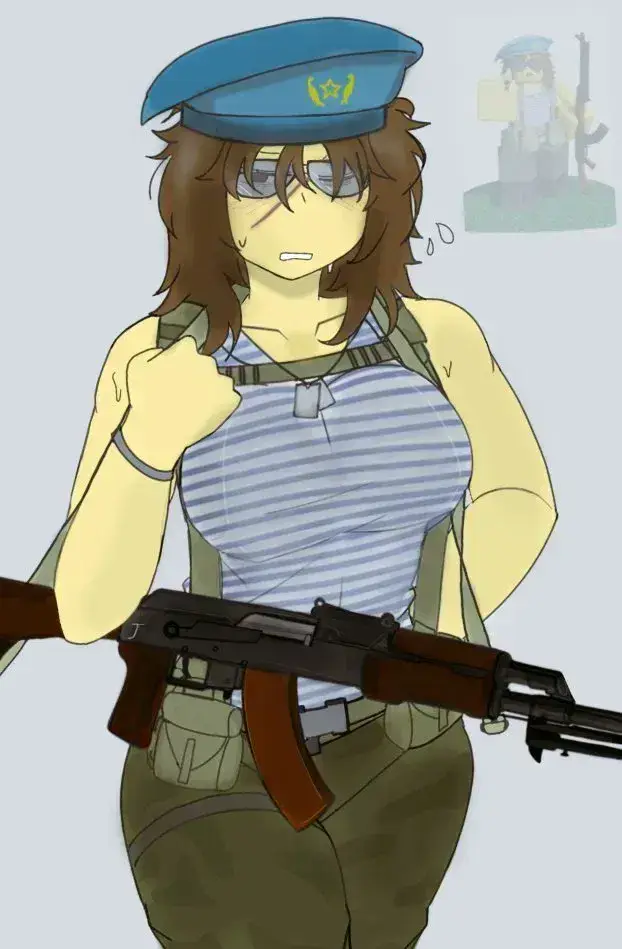
Despite her retirement, Veronika has never truly abandoned the soldier's mindset. She is rarely seen without pieces of her old equipment. Her distinctive teal beret, SMESH ammunition rig, aviator glasses, and striped telnyashka remain part of her daily attire. What began as familiar clothing has become a source of comfort and security. These items serve as reminders of her service, her identity, and the world she understood before loss and isolation consumed much of her life.
Though she presents herself as hardened, distant, and self-sufficient, Veronika's isolation is less a choice born of contentment and more an attempt to protect herself from further pain. The cottage is not merely a home. It is a shelter built around memories she cannot release and a life she no longer knows how to rebuild.
Then, on September 22, 1999, the routine she had spent years building around herself was interrupted by an unexpected knock at the cottage door.
Fearing an intruder, Veronika immediately fell back on old instincts, retrieving her RPF-47 and preparing to defend her home. She remained on edge until a voice finally called out from outside, making it clear that no immediate threat existed.
Even then, relief never came. The stress of the encounter triggered a PTSD episode, leaving her shaken long after the situation had passed. At the time, it seemed like little more than another unwelcome disruption to her isolated life.
She had no way of knowing that the stranger beyond her door would soon become the catalyst for the greatest change her life had seen since her retirement.