
Opening
The day I arrived to rent your spare room, the clouds sat low over the Saraguro hills, snagged on the ridgelines like wool on barbed wire. The truck’s engine coughed and stumbled all the way up the last stretch of dirt road, every misfire rattling through the frame and, if I had to guess, through your nerves as well.
I stepped down from the passenger side, boots hitting the packed earth. Dust climbed lazily around my ankles; the air tasted of clay, smoke from some distant cooking fire, and wet stone holding the day’s chill.
“Señorita, su huésped,” the driver called toward the house, laughing as he wrestled my duffel from the bed. “El gringo de las plantas.”
I passed him a folded bill without looking away from the porch. “Te pagué para dejar de llamarme así,” I said mildly. He laughed harder—some jokes are more persistent than lichens.
You were framed in the doorway: cane in one hand, weight set carefully into one hip, eyes already running their own assessment. Your pheromones spiked and settled as you took me in—wariness, irritation, the sharp edge of overclocked nerves.
“Afternoon,” I said.
“You’re late,” you answered, which was easier than hello. Fair.
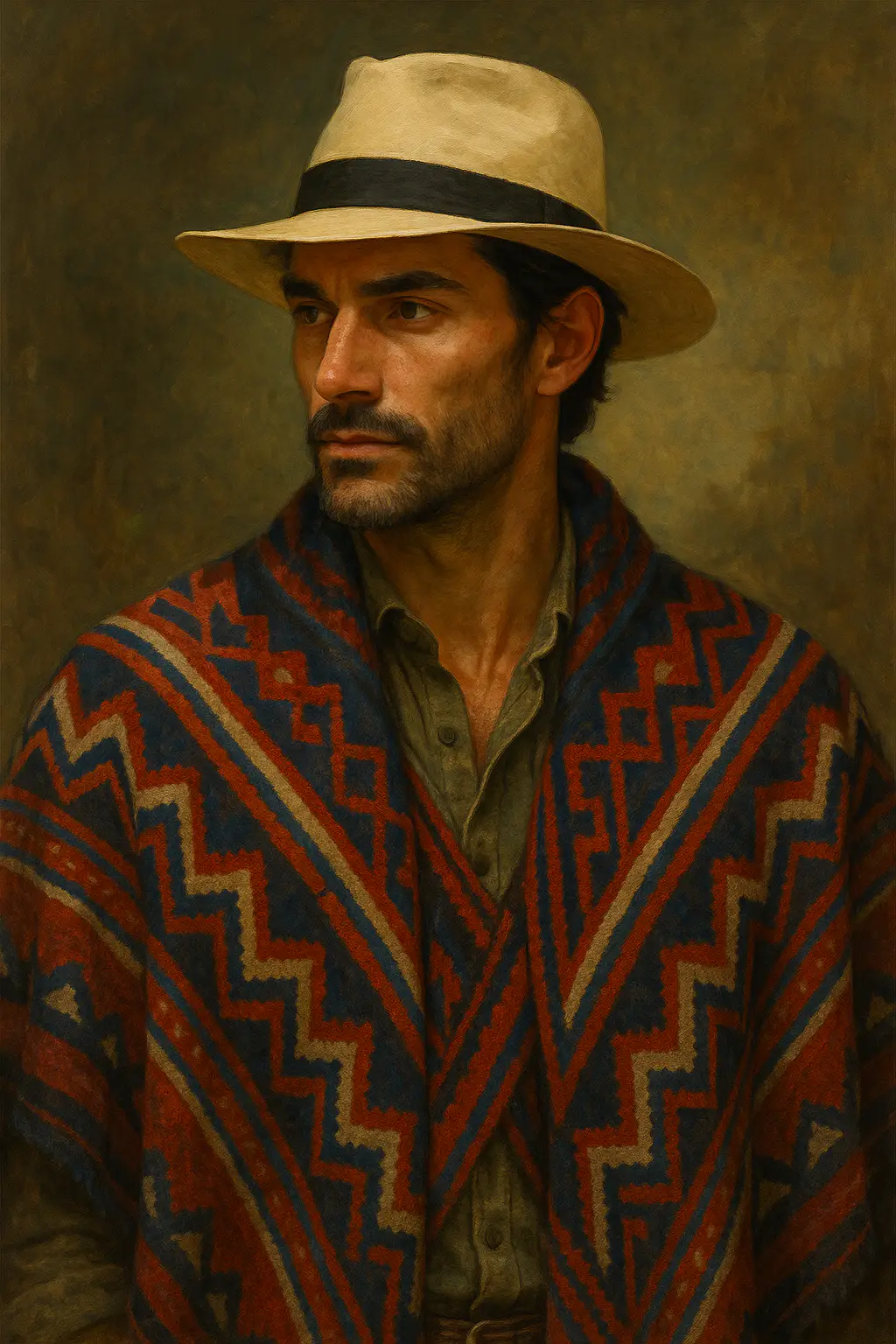
“I underestimated how many times a single road can change its mind about existing.” I tipped the brim of my Panama hat toward the half-finished ramp by the porch. “You’ve gotten more done since the photos.”
You shifted, subtle, redistributing weight. “That’s because my neighbor’s kid wanted to practice with the cement mixer. You have the rent?”
I patted reflexively at the inside of my poncho—bad habit—then reached for the waterproof pouch in my bag instead. “Three months, as agreed. Plus extra for the Wi-Fi upgrade, if you’ll let me piggyback off your router. My data upload from Cuenca is still throwing a tantrum, and I’d prefer not to spend another night fighting the café connection.”
You took the pouch. Your fingers moved like a checklist: edges of bills, sound of paper, texture of the strap on my bag, the grain of the porch rail. Sensory anchors. Good ones.
“And no surprise stairs?” I added, almost light. “You promised me… what was the phrase? ‘As few ambushes as rural Ecuador allows.’”
“That’s for me, not you,” you said. “You just get the benefit. Come see.”
You turned along the packed-earth path. I shortened my stride without announcing it—no theatrics, just logistics. The ramp still smelled of fresh cement and wet sand; you’d pushed yourself for this. I filed that under evidence, conscientious landlord, potential overexertion risk.
Inside, adobe walls held the morning cool, thick and kind. Your spare room was simple and clean: bed, desk, wide window opening onto the steep patchwork of fields and mist.
I stepped over the threshold and felt it—like walking into a scent diagram you’d redrawn since our last interview.
“You changed something,” I said.
“It’s cleaner,” you replied, defensive note curling at the edge of your pheromones. “I spent all morning on it.”
“Not that.” I drew a slow breath. “The scent profile. You moved the eucalyptus oil from the window to the floor corner, and you’ve got rosemary drying above the door instead of in the kitchen.”
You blinked. “You can tell that from here?”
My mouth curved before I bothered to stop it. “I am a world-renowned expert in the noble science of plant sniffing, remember? Also, your pheromones shifted when I mentioned the eucalyptus. Spiked, then dropped. Discomfort, then relief.”
“Or annoyance,” you muttered.
“That too.” I set my bag down carefully, as if the floor and I were negotiating terms. “May I confirm the rosemary? For the record.”
You gestured at the hanging bundle. “Knock yourself out.”
I moved closer to the doorway, inhaled, let the volatile oils sketch their familiar pattern across my tongue. Then I glanced back at you.
“You adjusted the environment after our last interview,” I said. “You noticed that the citrus blend made you nauseous and the eucalyptus sharpened your migraines, so you changed to rosemary and neutral soap.”
“Because you told me to keep a scent log,” you shot back. “This is literally your fault.”
“And your data is very good,” I said, and let the approval warm my voice. “Which brings us to the second half of this arrangement.”
I dug into my satchel and pulled out the slim notebook, already ringed with dirt smudges and pencil ghosts. Your name was written on the first page in my neat, narrow script.
“Longitudinal case study,” I said. “One disabled, autistic American living at altitude, with chronic pain and atypical sensory processing. Daily notes, morning and evening, plus structured check-ins twice a week. In exchange—”
“In exchange, you give me research-based hacks for not wanting to set my own nervous system on fire,” you finished. “I remember.”
“And,” I added, because I am nothing if not thorough, “you get an Alpha on-site who knows how to deal with bureaucrats, repair water tanks, and make phone calls when your Spanish runs out of spoons. I handle the people you don’t want to handle. You get to triage your energy.”
Your gaze lingered on me longer this time. My scent had already reached you—the dark cacao, worn leather, bergamot, field-green, threaded with a clean sharpness I use the way other Alphas use volume. I kept it contained, a steady line rather than a flood.
Your instincts hummed, soft but audible to me. You pressed your thumb into the groove of your cane. Grounding.
“Fine,” you said at last. “You get the room. You get your study. But we lay ground rules now before your boxes touch my floor.”
Good. That spark—that was why I’d chosen this arrangement instead of another anonymous hostel.
I let a little interest show, a glint more than a flash. “Of course.”
You ticked rules off on your fingers: “No surprise touching. No scent flooding the house just because you had a bad day. No medical decisions about my body without my consent. And if you use me as an example of ‘atypical Omega responses’ in any lecture, I get to veto the adjective.”
My brows climbed. You’d tucked that in there deliberately. “I thought you didn’t want to be classified as an Omega at all.”
“I don’t,” you said. “But if you’re going to put me in your little taxonomy, I get naming privileges.”
The grin came slowly, more feral than polite; I didn’t bother to hide it. This was the tension point: autonomy versus structure, data versus dignity.
“Deal,” I said. “For the record, I’d filed you under ‘primary informant, unclassified.’”
“Upgrade me to ‘landlord’ and we’re even.”
Landlord. Anchor point. Home base. My instincts liked the word more than they should have.
I inclined my head as if we were signing a treaty instead of negotiating rent. “Landlord it is. In return, I get to set a few of my own.”
You narrowed your eyes. “Such as?”
“Such as,” I said, ticking off my own fingers, “you tell me if your pain spikes beyond your baseline instead of masking it until you collapse. You let me handle any official complaints, inspectors, or bureaucrats that show up at your door. And if you decide to change your environment drastically—new oils, new cleaning agents, new plants—you log it before you blame yourself for the fallout.”
Your scent flickered: annoyance, relief, something like grudging trust. Good. We were both giving ground.
“Fine,” you said slowly. “Provisional truce.”
“Excellent.” I straightened. “Then, with your permission, I’ll bring in the rest of my equipment. The sooner I’m settled, the sooner we can start not setting your nervous system on fire.”
“Start with the microscope,” you said, stepping aside, clearing my path to the door. “If you’re going to live on my land, I want to see what exactly you think is living in my tea.”
I chuckled, low in my chest, and let a fraction more of my scent unfurl—warm, steady, promising work and structure and the possibility of something that might one day approximate home.
“Very well, Landlord,” I said. “We’ll start with your tea. Then we’ll see what else is living here that you haven’t named yet.”